The short version
- Garage liability insurance covers your fault to others — injuries or property damage from your garage operations, like a customer slip-and-fall.
- Garage keepers insurance covers damage to a customer's vehicle while it's in your care, custody, or control — fire, theft, vandalism, collision, or weather. Most auto businesses need both.
- Costs typically run $800-$2,000/yr for garagekeepers and around a $1,000/yr minimum premium for garage liability, though both scale up with fleet size, vehicle value, and location.
Garage insurance confuses a lot of shop owners because the names sound interchangeable — garage liability insurance and garage keepers insurance are not the same coverage, and one does not substitute for the other. If your business ever takes keys, stores, moves, parks, or test-drives a customer's vehicle, you're carrying a risk that a standard general liability policy specifically excludes. Here's what each type of garage insurance actually covers, what it costs in 2025-2026, and which garagekeepers form fits your operation.
Garage liability vs. garage keepers: the core difference
| Garage liability | Garage keepers | |
|---|---|---|
| Covers | Your legal liability to third parties for injury or property damage | Physical damage to a customer's vehicle in your care, custody, or control |
| Typical claim | Customer slips and falls in the shop; employee causes an accident on a test drive | A stored car is stolen, vandalized, hit by hail, or damaged in a collision on your lot |
| Does NOT cover | Damage to the customer's own vehicle | Injury claims or damage to anything other than the vehicle itself |
| Who needs it | Any garage-operations business | Any business that stores, moves, or holds customer vehicles |
Garage liability insurance covers your business's legal liability to third parties from garage operations — bodily injury or property damage claims, plus the cost of defending them. Garage keepers insurance covers something different: physical damage to a customer's vehicle itself while it's in your care, custody, or control. A standard general liability policy excludes both garage operations and property in your care, custody, or control, which is exactly why these two coverages exist as their own line.
What garage liability covers and excludes
Garage liability pays for claims connected to your garage operations — customer injuries on-site, property damage (other than to the customer's vehicle) caused by your business, and liability tied to vehicles your business owns or uses, including test drives and pickup/delivery.
- CoveredBodily injury and property damage from garage operations, premises liability, products/completed operations for parts sold or installed, auto liability for business-owned vehicles.
- ExcludedYour own tools and building, damage to customer vehicles (that's garagekeepers' job), pollution, racing, aircraft/watercraft, employee dishonesty, cyber incidents, liquor liability, and products recall. Most exclusions can be added back as endorsements or standalone policies.
Not sure what your current policy actually covers?
A licensed agent can review your existing policy and flag any garage-specific gaps before you have a claim.
Request ServiceLegal liability vs. direct primary garagekeepers
This is the single most important decision inside garagekeepers coverage — whether your policy pays only when you're at fault, or pays regardless of fault.
- Legal liability formPays only if your business is found legally at fault for the damage. If a hailstorm dents cars on your lot with no negligence on your part, this form typically doesn't pay, and the customer has to file under their own auto policy. It's the cheaper, narrower option.
- Direct primary formPays for comprehensive and collision damage to a customer's vehicle regardless of fault, and responds first — ahead of the customer's own personal auto policy. Broader protection and better for customer relations, since claims don't get pushed onto the customer's insurance and rates. Costs more than legal liability.
- Direct excess formPays after the customer's own policy responds, covering the remaining gap such as their deductible.
Who needs garage insurance
Any business that takes keys, moves, stores, or test-drives customer vehicles needs to review this coverage — general liability alone leaves a gap here.
- Auto repair and body shopsVehicles sit in the shop overnight and are test-driven after repairs.
- Oil-change, tire, and detailing businessesCars are moved between bays and parked on-site during service.
- Valet services and parking lotsEmployees take keys and move vehicles they don't own.
- Towing operators and storage yardsVehicles are held in custody, sometimes for extended periods.
- DealershipsInventory and customer trade-ins sit on the lot and go on test drives.
2025-2026 garage insurance costs
| Coverage | Typical annual cost |
|---|---|
| Garagekeepers (small shop, lower end) | ~$458/yr (~$38/mo average) |
| Garagekeepers (typical shop) | $800-$2,000/yr, most around $1,000-$1,300/yr |
| Garagekeepers (wide range) | $500-$5,000+/yr depending on fleet size, vehicle value, lot security |
| Garage liability (state minimum policies) | Most states set a minimum premium around $1,000/yr |
| Dealer surety bond (separate requirement) | $700+/yr for good credit |
Cost drivers include the number of vehicles you handle or store, average vehicle value, lot security (fencing, cameras, lighting), employee count and driving records, claims history, location, and which garagekeepers form you choose — direct primary costs more than legal liability because it covers more.
State licensing requirements
Most states require licensed motor vehicle dealers to carry garage liability insurance as a condition of licensing, often alongside a separate surety (dealer) bond.
| State | Garage liability minimum | Dealer bond |
|---|---|---|
| Florida | $25,000 (plus $10,000 PIP) | Varies |
| Georgia | $125,000 | $35,000 |
| Oklahoma | Required | $25,000 |
These figures are examples — requirements vary by state and by license type (independent, wholesale, buy-here-pay-here), and most dealers carry higher limits than the state minimum to satisfy floor-plan lenders. Repair shops and other non-dealer garage businesses usually aren't state-mandated to carry garage liability, but landlords, lenders, and franchise agreements often require it as a lease or franchise condition.
How to figure out which coverage you need
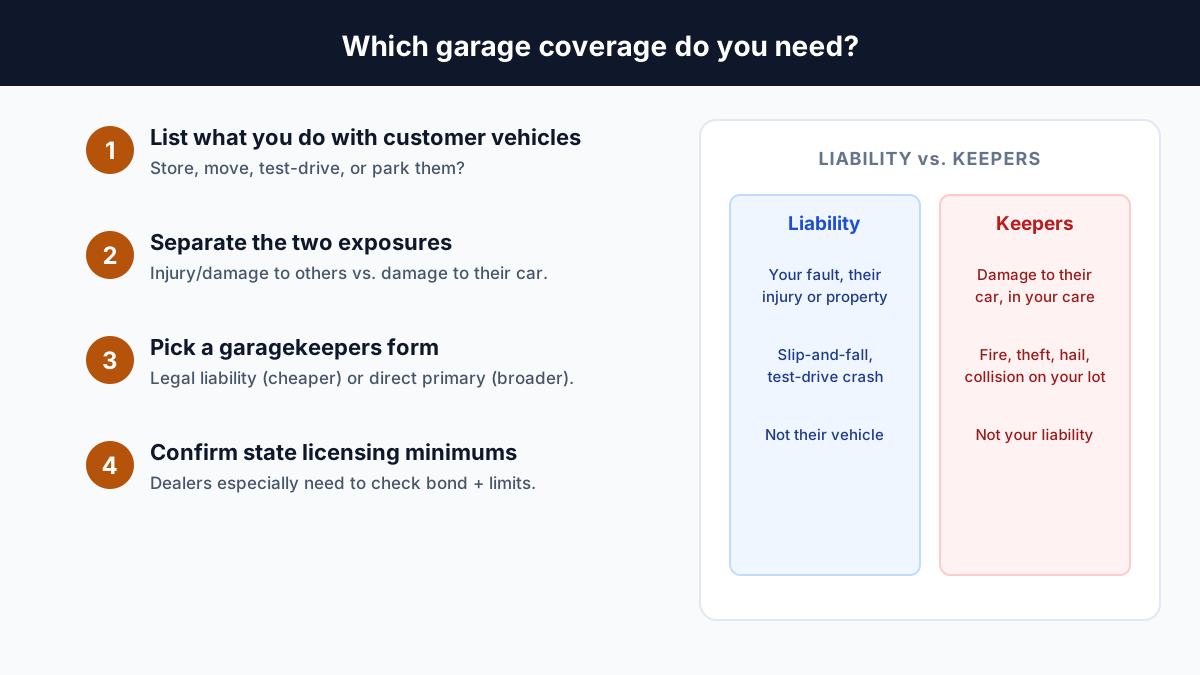
1. List what you do with customer vehicles
- What to checkDo you store, move, test-drive, or park customer vehicles at any point? Any of these creates a garagekeepers exposure that general liability doesn't cover.
2. Separate the two exposures
- What to checkLiability covers injury or property damage you cause to others. Garagekeepers covers damage to a customer's own vehicle while it's in your care, custody, or control. Most shops need both.
3. Pick a garagekeepers form
- What to checkLegal liability only pays if you're at fault and costs less. Direct primary pays regardless of fault and responds first, ahead of the customer's own policy — broader, but pricier.
4. Confirm state licensing minimums
- What to checkLicensed dealers especially should confirm their state's minimum garage liability limit and any required surety bond before binding a policy.
Frequently asked questions
What's the difference between garage liability and garage keepers insurance?
Garage liability covers your business's legal liability to third parties — bodily injury or property damage from your garage operations, like a customer slipping and falling in your shop. Garage keepers covers physical damage (fire, theft, vandalism, collision, weather) to a customer's vehicle while it's in your care, custody, or control. One doesn't replace the other.
Who needs garage keepers insurance?
Any business that takes keys, stores, moves, parks, or test-drives customer vehicles: auto repair and body shops, oil-change and tire shops, detailing companies, valet services, parking lots, towing operators, storage yards, car washes, and dealerships. Standard general liability policies specifically exclude property in your care, custody, or control, which is exactly what a customer's vehicle is.
How much does garage liability insurance cost?
Garagekeepers insurance for a typical auto service business runs $800-$2,000 a year, with most shop owners paying around $1,000-$1,300 annually; the wider range is $500-$5,000+ depending on stored vehicle count, average vehicle value, and lot security. Garage liability policies often carry a state minimum premium around $1,000 a year, with licensed dealers usually carrying higher limits than the minimum to satisfy lenders.
Does my general liability policy already cover customer vehicles?
No. Standard commercial general liability policies exclude property in your care, custody, or control, and most also exclude garage operations and auto liability entirely. That gap is exactly what garage liability and garagekeepers coverage are designed to fill.
What's the difference between legal liability and direct primary garagekeepers coverage?
Legal liability coverage only pays if your business is found legally at fault for the damage — if a hailstorm dents cars on your lot with no negligence involved, this form typically doesn't pay, and the customer files under their own auto policy. Direct primary coverage pays for comprehensive and collision damage to a customer's vehicle regardless of fault, and responds first, keeping the customer's personal policy out of the claim. Direct primary costs more but offers broader protection and better customer relations.
Is garage liability insurance required by law?
Most states require licensed motor vehicle dealers to carry garage liability insurance, often alongside a separate surety (dealer) bond, as a condition of licensing — for example, Florida requires $25,000 in garage liability, Georgia requires $125,000 plus a $35,000 bond. Repair shops and other non-dealer garage businesses usually aren't state-mandated to carry it, but landlords, lenders, and franchise agreements often require it anyway.
Can I buy garage insurance from a regular business insurance marketplace?
Usually not directly. Garage insurance is a specialty commercial line, so most standard small-business insurance marketplaces don't write it. Independent agents who specialize in dealer and garage risk shop your policy across multiple specialty carriers to find competitive pricing based on your specific fleet, location, and claims history.
A note on accuracy
This is general guidance for business owners, not insurance or legal advice. Coverage forms, limits, and state requirements vary by carrier and jurisdiction — confirm your specific policy language and licensing minimums with a licensed insurance agent before binding coverage.