The short version
- A professional garage door tune up costs $100-$150 for a standard visit, $150-$250 for a premium package — and it's cheaper than the emergency repairs it prevents.
- Do it at least once a year, with a quick monthly visual and safety check in between (twice a year for high-cycle doors or harsh climates).
- Most of the checklist is DIY-safe — lubrication, hardware tightening, weather stripping, and safety tests. Spring adjustment and cable work are professional-only.
A garage door tune up is routine maintenance for the largest, heaviest moving object in most homes — one that cycles 1,500-2,000+ times a year. Skip it, and hardware wears unevenly, the opener motor strains, and safety features can drift out of spec. It's also the best defense against the emergency calls covered elsewhere on this site: broken springs, off-track doors, and dead openers almost always show warning signs — grinding noise, uneven movement, slow response — weeks or months before total failure. Here's the full monthly and annual checklist, 2025-2026 tune up costs, and which steps are safe to DIY.
Monthly DIY checks (5 minutes, no tools)
- Visual sweepLook at cables, springs, rollers, and tracks for fraying, rust, gaps, or visible wear. Don't touch or adjust springs or cables yourself.
- Listen while it runsGrinding, popping, or scraping sounds signal a hardware problem starting.
- Auto-reverse safety testPlace a 2x4 block flat on the ground in the door's path and trigger a close. The door must reverse immediately on contact.
- Photo-eye testWave a broom handle through the sensor beams while the door is closing — it must stop and reverse. Wipe dusty lenses with a soft cloth; dirty sensors are the #1 cause of "door won't close" calls.
Overdue for a tune up?
A technician can run the full checklist below and catch problems before they turn into an emergency repair.
Request ServiceAnnual garage door tune up checklist
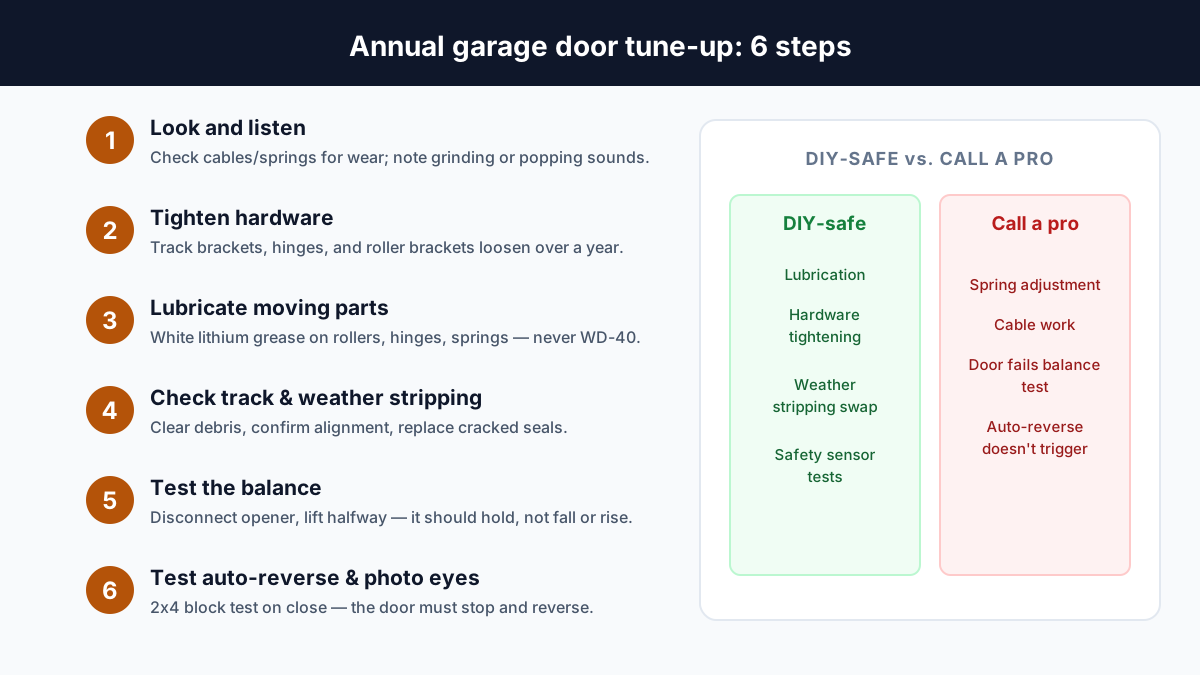
1. Tighten hardware
- What to doTighten track brackets, hinges, and roller brackets with a socket wrench — they loosen from a year of door vibration. Don't overtighten and strip the bolt.
2. Lubricate moving parts
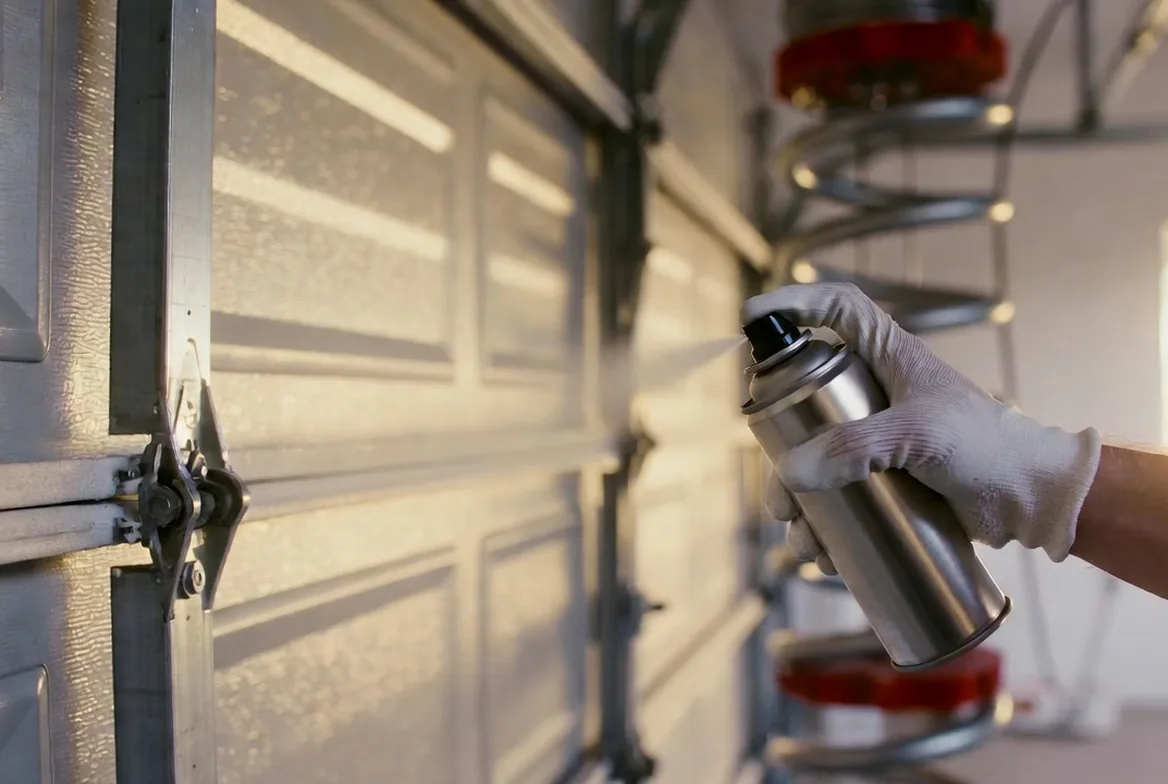
- What to doApply white lithium grease or a dedicated silicone garage-door lubricant spray to rollers, hinges, springs, and the opener's chain or screw drive. Avoid WD-40 or general oil — they attract dust and grit instead of protecting the metal.
3. Check track alignment
- What to doTracks should be plumb and level with no gaps between rollers and rail. Clear out leaves, dirt, or cobwebs. Rollers typically last 7-10 years; replace in sets if worn.
4. Inspect and replace weather stripping
- What to doCheck the bottom seal (sweep) and side/top perimeter seal for cracking, brittleness, or gaps. Bottom seals typically need replacing every 3-5 years; a failed seal lets in drafts, water, and pests.
5. Test the door balance
- What to doDisconnect the opener (pull the red release cord), lift the door manually to about waist height, and let go. A balanced door stays in place. If it falls or shoots up, the springs are out of adjustment — call a professional; never adjust torsion spring tension yourself.
6. Test auto-reverse and force settings
- What to doRepeat the 2x4 block test after lubrication, since adjustments can shift sensor alignment. Most openers also carry a 30-second safety-reversal timer that reverses the door if it doesn't reach its close limit in time — both are part of the UL 325 entrapment-protection standard.
2025-2026 garage door tune up cost
| Service | Typical cost |
|---|---|
| Standard professional tune up | $100-$150 |
| Premium tune up package | $150-$250 |
| Overall average range (all sources) | $100-$240 |
| Weather stripping replacement (full door) | $110-$230 |
| Roller replacement (per set) | Varies by material — get a local quote |
A tune up is a small, predictable cost next to what it prevents. Skipped maintenance is the biggest driver behind the emergency repairs covered in Garage Hub's other guides — broken springs, off-track doors, and opener failures usually show warning signs for weeks or months before they fail completely.
DIY-safe vs. call a pro
| DIY-safe | Call a professional |
|---|---|
| Lubrication | Torsion spring adjustment or replacement |
| Hardware tightening | Cable inspection findings (fraying, rust) and cable work |
| Weather stripping replacement | Door fails the balance test |
| Safety sensor / auto-reverse tests | Auto-reverse doesn't trigger on the 2x4 test |
Torsion springs and cables are under extremely high tension and are responsible for a large share of garage door injuries treated in ERs each year. Stick to the visual checks, lubrication, hardware tightening, weather stripping, and safety-feature testing above, and leave spring adjustment or replacement, cable work, and opener force-limit reprogramming to a licensed technician.
Frequently asked questions
How often should I get a garage door tune up?
At least once a year for most homes. High-cycle doors, coastal or humid climates, and doors over 10 years old benefit from a tune up twice a year, plus a 5-minute monthly visual and safety check in between.
How much does a garage door tune up cost?
A standard professional tune up runs $100-$150 and covers lubrication, hardware tightening, track alignment, and a safety sensor test. Premium packages with deeper diagnostics and higher-grade parts run $150-$250. The overall average across sources is about $100-$240.
Can I do a garage door tune up myself?
Yes, for most of the checklist: lubrication, hardware tightening, weather stripping, cleaning the tracks, and testing the balance and safety-reversal features. Leave torsion spring adjustment and cable work to a licensed technician — they're under extreme tension and are a leading cause of serious DIY injury.
What lubricant should I use on a garage door?
White lithium grease or a dedicated silicone garage-door lubricant spray. Avoid WD-40 or general household oil — they attract dust and grit instead of protecting the metal, so the lubrication doesn't last.
How do I know if my garage door is out of balance?
Disconnect the opener by pulling the release cord, then lift the door manually to about waist height and let go. A properly balanced door stays in place. If it falls or shoots upward, the springs are out of adjustment — that's a professional repair, not a DIY spring adjustment.
How often should garage door weather stripping be replaced?
Every 3-5 years on average, sooner in harsh climates. Replace it whenever you see cracking, brittleness, or gaps in the bottom seal or the side/top perimeter seal, since a failed seal lets in drafts, water, and pests.
What does a garage door tune up include?
A full tune up covers testing smooth operation, inspecting rollers/cables/springs/tracks, lubricating moving parts, tightening hardware, checking and adjusting track alignment, testing the auto-reverse safety feature and photo-eye sensors, and inspecting weather stripping and the counterbalance system.
A note on accuracy
This is general homeowner guidance, not a substitute for an on-site inspection. Cost figures are national-average ranges for 2025-2026 and vary by region, door type, and technician. If your door fails the balance or auto-reverse test, stop using it and have it evaluated before continuing.