The short version
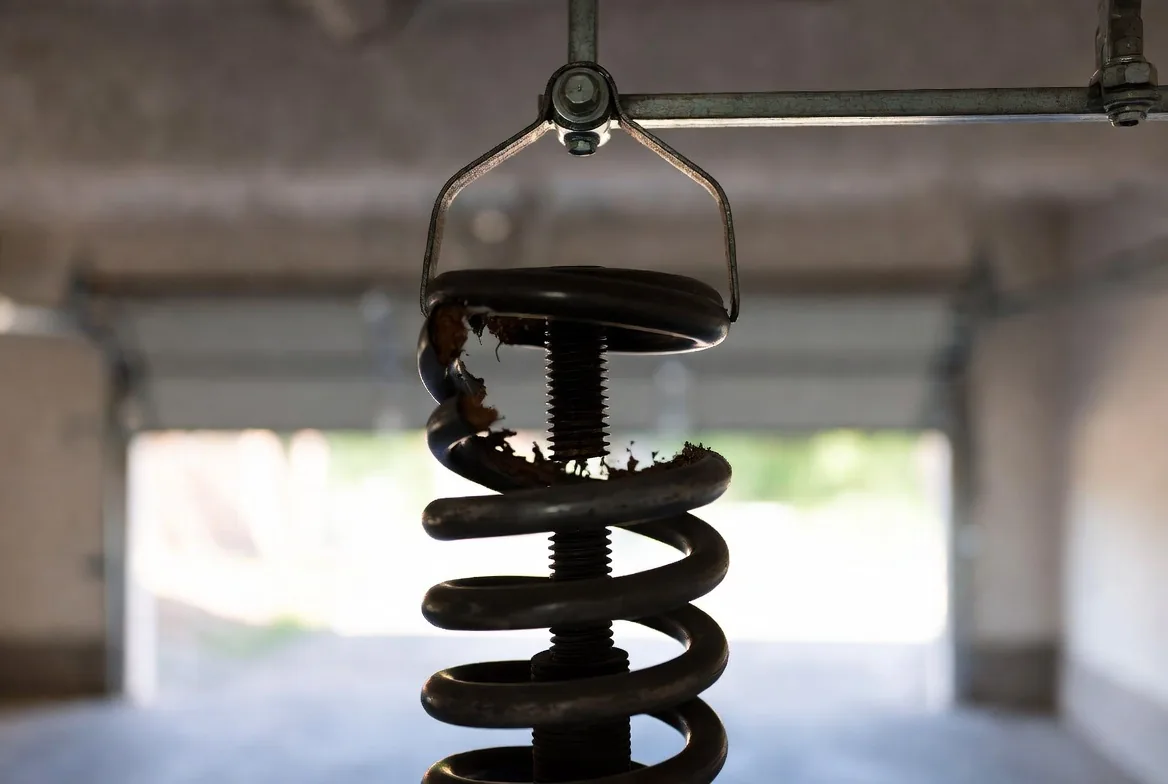
- A loud bang and a door that won't budge means a broken spring. Look for a visible 2-3 inch gap in the coils of the horizontal torsion spring above the door, or a door that rises crooked when lifted by hand.
- Stop using the opener immediately. The springs, not the motor, carry the door's full weight — forcing the opener to compensate can burn out the motor, strip the gears, or drop the door suddenly.
- This is not a DIY repair. Torsion springs store enough energy to cause severe injuries. Expect to pay $150-$425 for a professional replacement, and replace both springs in a pair even if only one broke.
Garage door springs are the counterbalance system that does the heavy lifting — literally. A sectional garage door weighs 100 to 400 lbs, and the springs neutralize almost all of that weight so the opener only needs to apply about 15 lbs of force to move it. When a spring breaks, that counterbalance disappears, and the door becomes too heavy and dangerous to operate normally. Here's how to recognize a broken spring, what it costs to fix in 2025-2026, and why professionals uniformly warn against handling this repair yourself.
How garage door springs actually work
Garage door springs store elastic potential energy following Hooke's Law, then release it to counterbalance the door's weight as it opens and closes. Torsion springs use angular torque (twisting around a shaft); extension springs use linear stretch. That stored energy transfers through steel lift cables — rated to a 5:1 safety factor under ANSI/DASMA 110 — to drums or pulleys that raise and lower the door. When the door is closed, the springs are at maximum tension, holding the most stored energy of the entire cycle. If the spring wears out, rusts, or was mismatched to the door's weight, the load shifts onto the opener instead, which is exactly what triggers the failures below.
Torsion vs. extension springs
Most modern garage doors use a torsion spring system: one or two springs mounted horizontally on a steel shaft directly above the door opening. Because the spring is threaded onto a solid shaft, a break stays contained on the shaft rather than flying loose. Older or budget installations often use extension springs instead, running parallel to the horizontal tracks on both sides of the door. These aren't anchored to a central shaft, so a snapped extension spring can become a high-speed projectile unless it has a safety containment cable running through the coil.
| Factor | Torsion | Extension |
|---|---|---|
| Mounting | Horizontal shaft above the door | Parallel to tracks, both sides |
| If it breaks | Stays contained on the shaft | Can fly loose without a safety cable |
| Average lifespan | 10,000-20,000 cycles | 8,000-15,000 cycles |
| Maintenance needs | Low | Higher — pulleys and cables wear faster |
| Upfront cost | Higher | Lower |
| Long-term cost | More cost-effective over its life | More frequent failures add up |
6 signs your garage door spring is broken
- The door won't open at allThe opener hums, strains, or lifts a few inches then reverses — its force-limit sensors are stopping it before the motor is damaged.
- A loud bang from the garageA gunshot- or backfire-like sound, often while the door is closed and idle, as the coils give way under static tension.
- A visible gap in the coilsOn a torsion spring, the two halves pull apart leaving a 2-3 inch gap — a clear sign of complete failure.
- The door rises crooked or bindsIn dual-spring setups, one broken spring lets one side rise faster than the other, so the door tilts, binds, or can jump the tracks.
- The opener strains or grindsSlower movement, jerky motion, or grinding noise mean the motor is now carrying weight the spring used to handle — continued use can burn it out.
- Loose or frayed lift cablesLost spring tension lets cables slip off the drums; frayed strands are then at risk of snapping under load.
How to check for a broken spring
⚠ Look, don't touch
This check only involves looking at the spring and testing the door by hand — never loosen, wind, or remove the spring yourself.
1. Stop using the opener
- WhyThe instant the door won't move normally, sounds strained, or you heard a bang, stop pressing the opener button. Forcing it can burn out the motor or let the door drop suddenly.
2. Disconnect the opener and test by hand
- HowPull the red emergency release cord so the door is fully disconnected from the opener, then try lifting it manually. A properly balanced door should move smoothly with well under 15 lbs of force.
3. Look at the torsion shaft
- What to look forWith the door closed, look at the horizontal spring above the door opening for a visible 2-3 inch gap in the coils — that confirms a complete torsion spring break.
4. Check for uneven travel
- What it meansIf the door rises crooked, binds, or jumps when lifted by hand, one spring in a dual-spring system has likely failed while the other is still intact.
5. Leave it closed and call a professional
- Next stepLeave the door closed, keep the opener disconnected so no one accidentally triggers it, and call a professional for replacement. Don't attempt to wind, loosen, or remove the spring yourself.
Confirmed a broken spring?
A technician can bring matched replacement springs and have the door balanced and tested again same-day.
Request ServiceWhy this isn't a DIY repair
⚠ One of the most dangerous home repairs
Per CPSC NEISS data, an estimated 20,000-30,000 emergency-room visits a year in the US relate to garage door accidents, with roughly 1,500 specifically involving high-tension springs, lift cables, or sharp components during DIY repair and maintenance. A clinical review of open globe eye injuries from high-velocity spring dislodgement during amateur repairs found every documented patient required complex surgery, with outcomes ranging from severely reduced vision to complete blindness. Separately, manual spring winding with steel bars has been found to increase shoulder muscle and joint burden by roughly 40% compared with mechanical winding tools, and bars that slip or kick back cause rotator cuff tears, wrist fractures, and lacerations.
Torsion springs are wound under enormous tension — the same energy that lifts a 100-400 lb door is released all at once if a winding bar slips or the wrong tool is used. Professionals use dedicated solid-steel winding bars (never screwdrivers, pliers, or rebar), know the correct turn count for your specific door and spring size, and match new springs to the door's exact weight. Manufacturers color-code tensioned brackets and fasteners in bright red specifically to warn against loosening them without the right training and tools.
How long do garage door springs last?
Spring life is measured in cycles (one full open-close), not years. Standard-cycle torsion springs last 10,000-15,000 cycles — roughly 7-10 years at 3-5 uses a day. High-cycle springs can reach 25,000-80,000 cycles. Extension springs generally fall short of torsion springs, at 8,000-15,000 cycles. Rust and corrosion reduce the effective wire diameter and create stress points; extreme temperature swings and coastal salt air accelerate fatigue further.
Technicians typically replace both springs in a pair even if only one has broken. Both were installed at the same time with identical cycle counts, so if one has failed, the other is at the same fatigue point and commonly fails within weeks to months. Replacing only one also creates a tension mismatch — the new spring at full strength against an old, weakened one — which causes uneven travel, track binding, premature cable wear, and added strain on the opener.
2025-2026 replacement costs
Costs vary by spring type, how many need replacing, and whether it's an emergency same-day call.
| Service | Parts | Labor | Total range |
|---|---|---|---|
| Single torsion spring | $30-$100 | $75-$150 | $150-$350 |
| Dual torsion springs | $60-$200 | $100-$200 | $175-$425 |
| Single extension spring | $15-$45 | $75-$150 | $100-$200 |
| Dual extension springs | $30-$90 | $90-$180 | $120-$270 |
| Extension-to-torsion conversion | $220-$350 | $180-$450 | $400-$800 |
Emergency or same-day service, and premium powder-coated or high-cycle springs, can push the total toward the top of these ranges or slightly above. Ask any quote whether it includes both springs, a balance test, and a cable inspection — a worn cable is a common companion failure.
Maintenance that extends spring life
A monthly manual balance test catches problems early: with the door closed, pull the emergency release, open the door to about half height, and let go. A properly balanced door stays roughly in place; one that falls means weak springs, and one that shoots upward means over-tensioned springs — either way, call a professional rather than adjusting it yourself.
Lubricate the spring coils every 3-6 months with a silicone- or lithium-based garage-door lubricant — not WD-40, which is a degreaser that strips protective oils, and not automotive grease, which attracts grit and forms an abrasive paste. Keep an eye out for rust or pitting, which are early signs the spring is nearing the end of its service life.
Frequently asked questions
Is it safe to open the garage door with a broken spring?
No. The springs, not the opener, carry the door's full 100-400 lb weight. With a broken spring the opener has to lift dead weight, which can strip its gears, burn out the motor, or let the door crash down suddenly.
How much does it cost to replace a garage door spring in 2026?
A single torsion spring typically runs $150-$350 including parts and labor. A dual torsion-spring job (common on double-car doors) runs $175-$425. Extension springs are cheaper, around $100-$270 for the pair replaced.
Can I replace a garage door spring myself?
It isn't recommended. Torsion springs store enough energy to cause severe injury when released with hand tools — CPSC data links roughly 1,500 emergency-room visits a year to garage door springs and cables, some resulting in permanent eye injuries or blindness. Professionals use dedicated winding bars and know the exact turn count for your door.
Why do technicians replace both springs even if only one broke?
Both springs were installed at the same time with identical wear. If one has failed, the other is at the same fatigue point and typically fails within weeks to months. Replacing only one also creates a tension mismatch that makes the door travel crooked and strains the opener and cables.
How long do garage door springs last?
Standard-cycle torsion springs last 10,000-15,000 cycles, or roughly 7-10 years at 3-5 uses a day. High-cycle springs can reach 25,000-80,000 cycles. Rust, coastal salt air, and extreme temperature swings shorten that lifespan.
What's the difference between torsion and extension springs?
Torsion springs mount horizontally on a shaft above the door and twist to store energy; because they're threaded on a solid shaft, a broken one stays contained. Extension springs run along the tracks and stretch instead of twisting — if one snaps, it can become a dangerous projectile unless fitted with a safety containment cable.
What does a broken spring sound like?
Most people describe it as a loud bang or gunshot-like sound from the garage, often while the door is sitting closed and not even in use, as the coils give way under stored tension.
A note on safety
This is general homeowner guidance, not a substitute for a technician's on-site inspection. Cost figures are national-average ranges for 2025-2026 and vary by region, door size, and spring type. Garage door springs store enormous energy — never attempt to wind, loosen, or remove one yourself.