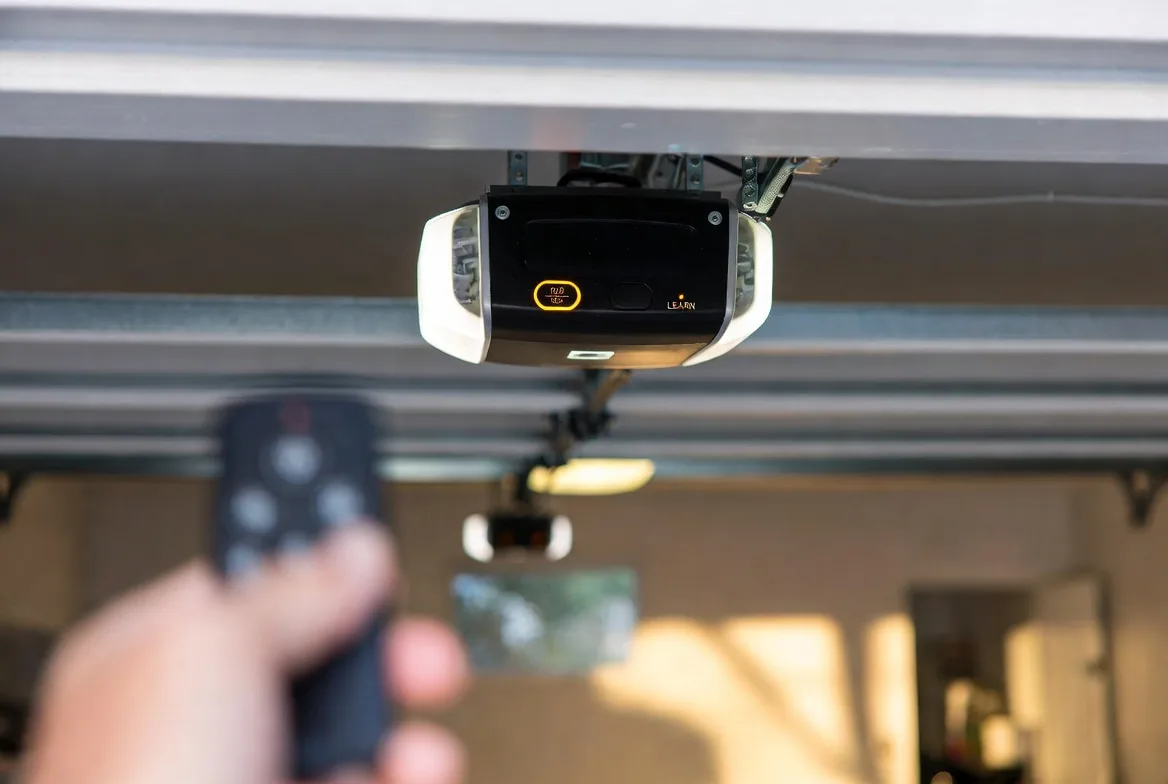
The short version
- A garage door opener not working is rarely a dead unit. Check power, test the wall button separately from the remote, and inspect the safety sensors before assuming the worst.
- The blinking LED next to the Learn button is a built-in diagnosis. LiftMaster and Chamberlain share the same blink-code system; Craftsman issues are almost always the remote; Genie uses its own red/green LED codes.
- Expect $100-$350 for a professional repair (averaging $150-$200), versus roughly $329 to replace the opener outright — a better move once a unit is past 10-15 years old.
A garage door opener not working can mean a dozen different things: a dead remote battery, a misaligned safety sensor, a tripped breaker, a stripped gear, or a failed logic board. The good news is that modern openers from LiftMaster, Chamberlain, Craftsman, and Genie all include a self-diagnostic LED that tells you which of these it is — you just have to know how to read it, and the codes aren't the same across brands. Here's the universal first-pass check, then each brand's specific blink codes, remote fixes, and what professional repair costs in 2025-2026.
Garage door opener not working? Try this first
Before diagnosing a specific brand, run this quick universal check — it resolves a large share of "not working" calls without any brand-specific knowledge at all.
1. Check power at the unit
- What to doTest the outlet with another device (a phone charger or lamp works), check the breaker or GFCI for a trip, and confirm the opener's plug hasn't vibrated loose from the ceiling.
2. Test the wall control, not just the remote
- What to doPress the wall-mounted button first. If the door responds to the wall button but not the remote, the problem is almost always the remote — a dead battery, lost pairing, or an engaged lock button — not the opener itself.
3. Inspect the safety sensors
- What to doLook at the two small photo-eye sensors mounted about 6 inches off the floor on each track rail. Misalignment, a dirty lens, or anything blocking the beam is the single most common reason a door refuses to close, and most openers will flash an error code for it.
4. Confirm the trolley isn't in manual mode
- What to doCheck that the red manual-release cord hasn't disconnected the trolley from the drive carriage. In that state the motor runs normally but the door doesn't move at all.
5. Listen to the motor
- What it tells youA humming motor with no door movement usually means a stripped drive gear or a disengaged trolley. A completely silent unit points toward a power, logic-board, or capacitor failure.
Modern LiftMaster, Chamberlain, and Craftsman openers built after roughly 2011 share the same underlying Chamberlain Group electronics and the same style of blinking-LED self-diagnostic system next to the Learn button, so troubleshooting across those three brands is nearly identical. Genie runs its own electronics platform with a different LED code scheme.
LiftMaster garage door opener not working: blink codes
LiftMaster's LED beside the Learn button flashes a repeating pattern every 8 seconds — the number of blinks maps directly to the fault.
| Blinks | Meaning | Fix |
|---|---|---|
| 1 blink | Safety sensor wiring fault | Inspect the sensor wire along the track for pinches or cuts; reseat connectors at the sensor and the header board. |
| 2 blinks | Logic board failure | Often from a power surge, lightning strike, or age; the circuit board typically needs replacement. |
| 4 blinks | Photo-eye sensors misaligned or obstructed | Clean both lenses and aim them at each other until the receiver LED glows solid; clear any obstruction from the beam path. |
| 5 blinks | Motor overheating / RPM sensor error | Let the motor cool 15-30 minutes; ensure airflow around the housing isn't blocked by dust or storage. |
If the wall button opens the door but the remote doesn't, replace the remote's battery first. If that doesn't fix it, re-pair the remote: hold the Learn button on the motor unit until its LED turns off, then press the remote button — the LED should flash to confirm the pairing.
Chamberlain opener repair: blink codes
Chamberlain shares LiftMaster's parent company and electronics, so the same blink-count logic generally applies on units from the same generation. Chamberlain's own documentation groups codes slightly differently depending on model year — typically 1 blink for sensor wiring, 2 blinks for an electrical fault at the logic board, and 3 blinks for a general wiring problem — so match the blink count to your specific model's printed manual when the numbers don't line up exactly with the LiftMaster chart above.
A full power-cycle clears a large share of "phantom" glitches before you assume a real component has failed: unplug the unit for 30 seconds to let the capacitors discharge, then plug it back in.
Craftsman opener repair: remote-side issues
Craftsman openers run on the same Chamberlain Group hardware under license, but the reported problems are overwhelmingly on the remote side rather than the opener unit itself:
- Dead remote batteryThe single most common cause of a Craftsman remote that's stopped working.
- LOCK button engagedCheck the wall console for an activated lock button, which disables every remote at once.
- Lost pairingHold the unit's Learn button until its LED lights, then press the remote button; the LED blinks to confirm the pair.
- RF interferenceLED garage lighting, Wi-Fi routers, and other nearby 2.4GHz/315-433MHz devices can jam the remote signal.
- RangeCraftsman remotes have a shorter practical range than some competitors — rule out simple distance before assuming a fault.
If a second remote also fails to pair after these steps, the receiver or logic board is the likely failure point and the unit needs professional service.
Genie garage door opener not working: LED codes
Genie chain- and belt-drive openers use red or green LEDs next to their own Learn button, and the codes don't match the LiftMaster/Chamberlain numbering above.
| Signal | Meaning |
|---|---|
| Red LED: 1 blink, pause, repeat | No remote has been programmed to the unit |
| 1 blink (general) | Safety sensor problem — check alignment and obstructions |
| Green LED: 3 blinks, pause, repeat | Travel limits are set backwards (open/close limits reversed) |
The most common overall causes of a Genie opener failing: dead remote batteries, tripped or misaligned safety sensors, a locked-out keypad, a power interruption, or, on older units, a failing circuit board.
Remote or keypad not working, but the wall button is fine
Across every brand, this pattern points to the remote, not the opener. Work through these in order:
- Replace the batteryThe most common fix by a wide margin.
- Check for a lock buttonAn engaged lock on the wall console disables all remotes at once.
- Re-pair the remoteHold the Learn button on the motor unit until its LED changes state, then press the remote button until the LED confirms the pairing.
- Rule out interferenceLED bulbs, Wi-Fi routers, and other nearby wireless devices can jam the signal — test closer to the unit.
- Try a second remoteIf a spare remote works, the original remote is the faulty part, not the opener.
Still not working after these checks?
A technician can pull the exact fault code for your brand and model and bring the matched logic board, sensor, or gear kit needed.
Request Service2025-2026 garage door opener repair costs
| Service | Typical range |
|---|---|
| Minor fix (remote reprogramming, sensor realignment, keypad/battery) | $75-$150 |
| Circuit board / logic board or faulty motor electronics | $75-$300 |
| Major repair (burned-out motor, stripped drive gear) | $250-$500 |
| Typical standard service call (national average) | $150-$350 (often ~$150-$200) |
| Diagnostic / service call fee (first hour) | $80-$130, then ~$40-$130/hr after |
Roughly, the average full opener repair runs about $174 versus about $329 to replace the opener entirely. Most pros recommend replacing rather than repeatedly repairing openers older than 10-15 years, since the motor and logic board tend to wear out around the same age.
Safety notes
⚠ Don't bypass the safety sensors
The auto-reverse photo-eye sensor system is a federally mandated safety feature under the UL 325 standard. Never unplug, disable, or "trick" the sensors to force a door to close — if a sensor is damaged, replace it instead.
Logic board and motor-internal repairs involve working inside a powered, high-torque motor housing and are best left to a licensed technician. Never force a door that won't move via the opener without first pulling the manual release (red cord) — forcing the trolley against a jammed unit can strip the drive gear or damage the belt or chain.
Frequently asked questions
Why is my garage door opener not working at all?
Start with power: test the outlet with another device and check the breaker. If power is fine, listen for the motor — silence points to a logic-board or capacitor failure, while a humming motor with no door movement usually means a stripped drive gear or a disconnected trolley.
My wall button works but my remote doesn't. What's wrong?
This is almost always the remote, not the opener. Replace the battery first, then re-pair it: hold the Learn button on the motor unit until its LED turns off, then press the remote button until the LED blinks to confirm the pairing.
What does the blinking light on my opener mean?
On LiftMaster and Chamberlain units made after about 2011, the LED beside the Learn button flashes a repeating count every 8 seconds that maps to a specific fault — commonly 1 blink for a sensor wiring issue, 4 blinks for misaligned photo eyes, and 5 blinks for an overheating motor. Genie uses a separate red/green LED code system next to its own Learn button.
How much does it cost to fix a garage door opener?
Garage door opener repair typically runs $100-$350, averaging around $150-$200 for a standard service call. Minor fixes like remote reprogramming or sensor realignment run $75-$150, while a failed logic board or motor runs $75-$300 or more. Most companies also charge an $80-$130 diagnostic visit fee.
Is it worth repairing an old opener or should I replace it?
If the opener is more than 10-15 years old, or you're facing a second or third repair, replacement is usually the better value. Average repair costs around $174 versus roughly $329 for a full opener replacement, and a new unit adds current safety-sensor and rolling-code security standards.
Why does my Craftsman remote work sometimes but not others?
Inconsistent range is usually signal interference from nearby LED garage lights, Wi-Fi routers, or other 2.4GHz devices, or simply standing too far from the unit. Test by standing closer, and if it's still inconsistent, try re-pairing the remote or swapping its battery.
Can I fix a garage door opener myself?
Sensor cleaning, alignment, battery swaps, and remote re-pairing are safe DIY tasks on any brand. Logic-board replacement, motor repair, or anything involving the drive gear or spring system should go to a licensed technician — those repairs involve working inside a powered motor housing or under spring tension.
A note on accuracy
This is general homeowner guidance, not a substitute for a technician's on-site diagnosis. Blink-code meanings can vary slightly by exact model and manufacture year — always confirm against your unit's printed manual when in doubt. Cost figures are national-average ranges for 2025-2026 and vary by region.