The short version
- A crooked door or a loose cable on the floor means garage door cable repair is due. Look for a cable hanging slack or coiled near the bottom bracket, a door that sags toward one side, or grinding and shrieking noise during operation.
- Stop using the opener immediately. Lift cables carry the same stored spring tension that lifts the door — forcing a damaged cable can strip the opener, snap the cable under load, or drop the door suddenly.
- This is not a DIY repair. Cable replacement requires releasing spring tension with steel winding bars, the same risk profile as spring replacement. Expect to pay $150-$350 for a professional job, and replace both cables even if only one failed.
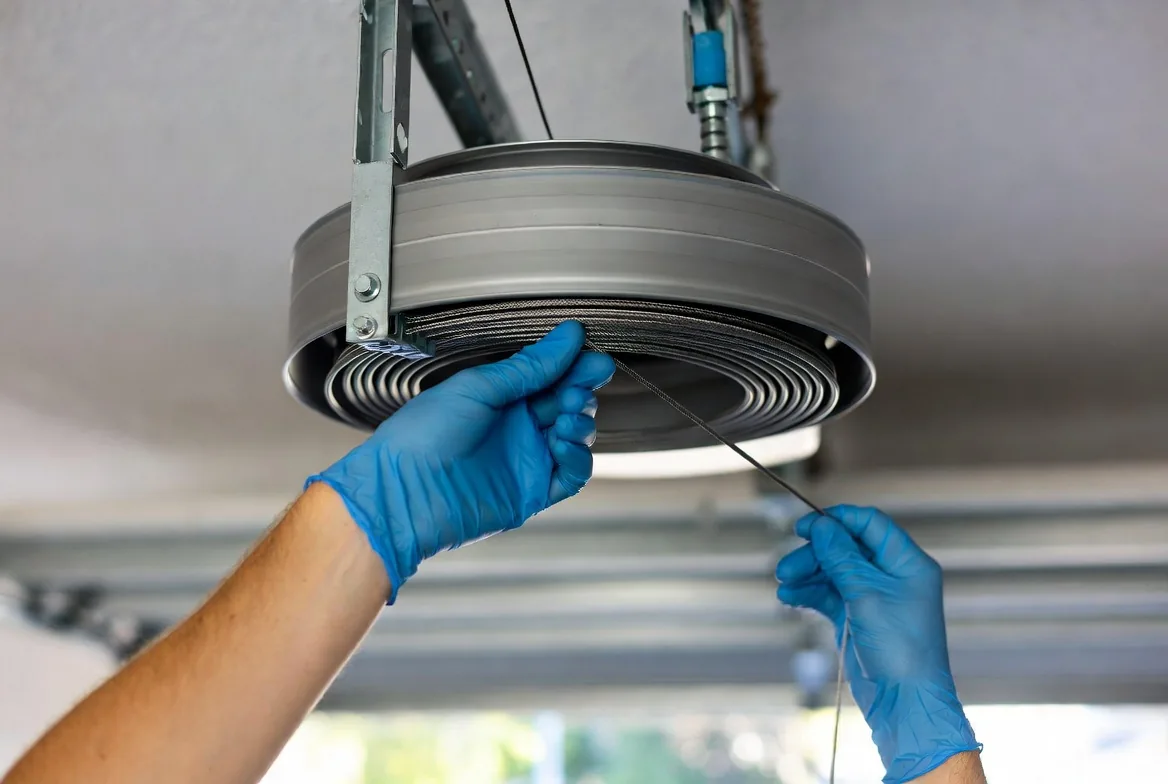
Garage door lift cables are the steel ropes that carry the spring system's stored energy from the door's bottom corners up to the drums mounted above the track. When a cable frays, snaps, or slips off its drum, the door loses support on that side — it can hang crooked, refuse to lift, or drop hard without warning. Here's how to recognize garage door cable repair needs, what causes cables to fail, what professional replacement costs in 2025-2026, and why this is one of the jobs pros insist you leave to them.
How garage door cables actually work
Lift cables run from the bottom corner brackets of the door up to cable drums mounted on the torsion shaft, or, on extension-spring systems, over pulleys along the horizontal track. They transmit the spring's stored energy into the actual lifting motion. The most common cable type is 7×19 galvanized aircraft cable — 7 strands of 19 wires each, chosen for flexibility — typically 1/8″ diameter on standard residential doors (rated around 2,000 lbs breaking strength) and 5/32″-3/16″ on heavier residential or light-commercial doors. Cable length and drum size are matched to the door's height and weight under the DASMA 110 standard for lifting cables on sectional doors.
Signs your garage door cable has snapped or come off
- A cable hanging loose or coiled on the floorThe clearest visual sign — check both bottom corners near the rollers.
- The door hangs crooked or sags on one sideWith one cable gone, only one side of the door is properly supported, so it tilts or binds in the tracks.
- The opener strains, clicks, or hums without liftingOr the door lifts a few inches and stops — the opener is fighting a load the cable should be carrying.
- Grinding, scraping, or a shrieking noiseUnusual sounds during operation often mean a cable is dragging or has slipped its groove.
- The door drops harder or faster on one sideUneven support means uneven, and sometimes sudden, movement.
- Visible fraying near the bottom bracket or drumIndividual strands sticking out like a frayed rope is an early warning sign the cable is close to failing.
What causes cables to fail or come off the drum
- A broken or unevenly tensioned springIf one spring in a pair fails, its cable loses tension and can slip out of the drum grooves.
- Misaligned, bent, or obstructed tracksUneven travel throws extra load onto one cable until it overloads and unwinds off the drum.
- A damaged cable drumA bent or cracked drum throws the cable off its intended path.
- Incorrect original installationWrong winding direction or a cable not properly seated on the drum can slip during normal use.
- Wrong-size drum for the cableDrum grooves are sized to a specific cable gauge — a mismatch lets the cable slip loose.
- Ordinary wear — fraying, rust, and ageOver time, cables weaken until they part under normal tension.
How to check for a failing cable
⚠ Look, don't touch
This check only involves looking at the cable and the door — never loosen, unwind, or remove a cable or the spring it's attached to yourself.
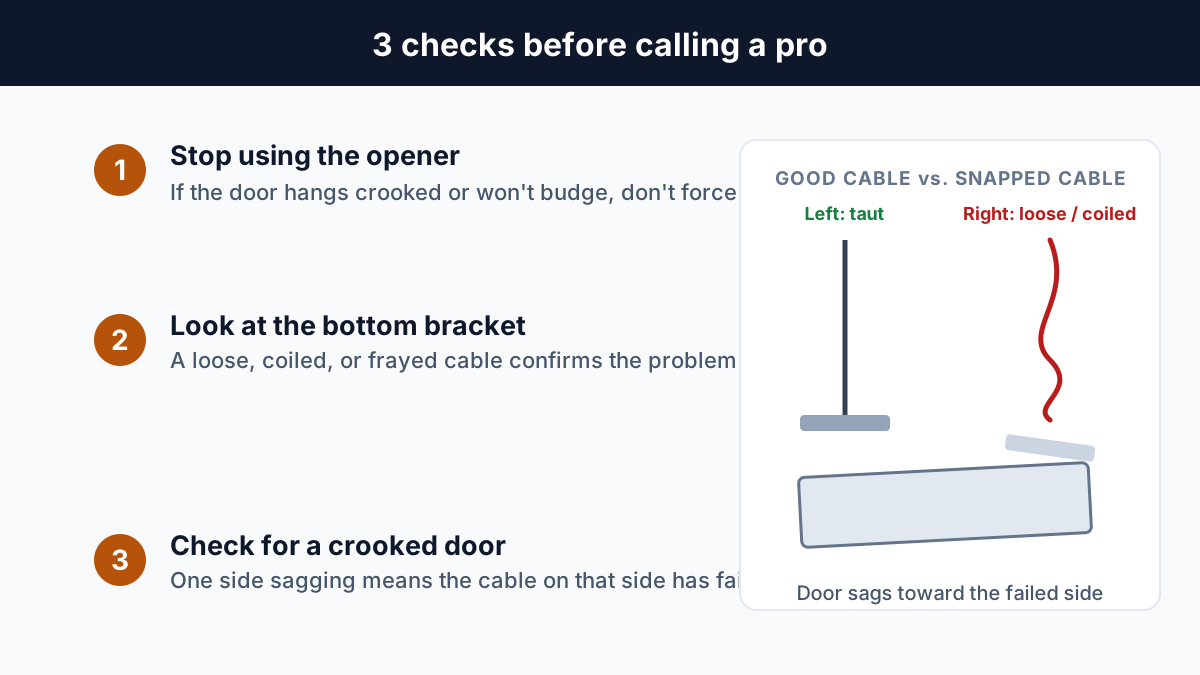
1. Stop using the opener
- WhyThe moment the door hangs crooked, won't lift, or you spot a loose cable, stop pressing the opener button. Continuing can strip the gears or let the door drop.
2. Look at the bottom bracket
- What to look forCheck both bottom corners of the door for a cable that's slack, coiled on the floor, or missing entirely from its bracket.
3. Check the drum at the top of the track
- What to look forWith the door closed, look at the cable drums above the door for a cable that has unwound or slipped off its grooves.
4. Check for a crooked or uneven door
- What it meansA door that sags or binds toward one side means the cable on that side has lost tension or failed outright.
5. Leave it closed and call a professional
- Next stepKeep the opener disconnected and the door closed, and call a professional. Cable replacement requires safely releasing spring tension first — don't attempt it yourself.
Spotted a cable problem?
A technician can bring matched replacement cables and have the door balanced and tested again same-day.
Request ServiceWhy this isn't a DIY repair
⚠ Same risk as spring replacement
Lift cables are under high tension continuously whenever the door is closed — the same stored energy that powers the springs runs through them. If a cable is disturbed or fails while under load, it can whip violently enough to cut skin or lodge in drywall or wood framing. Replacing a cable means clamping the door open with locking pliers or C-clamps below the rollers, then fully unwinding the torsion spring with two solid-steel winding bars before the drum or cable can be safely touched — the same technique and the same risk profile as spring replacement.
Professional technicians carry the correct cable gauge, matched drums, and winding bars, and know the door-specific turn count needed to re-tension evenly on both sides. Attempting this with pliers, a screwdriver, or without a second winding bar is a commonly cited cause of severe hand, eye, and facial injuries in garage door DIY repair.
How long do garage door cables last?
Garage door cables typically last 7-10 years under normal residential use, and up to 10-15 years with light use and good conditions. Humid climates, poor drainage, and infrequent maintenance accelerate rust and shorten cable life. Inspect cables at least annually for fraying, rust, or slack, lubricate near the bottom bracket and drum area with a silicone- or lithium-based garage-door lubricant roughly twice a year (not WD-40 or automotive grease), and have a professional check cable tension, drum condition, and alignment during an annual service visit.
2025-2026 garage door cable repair costs
Costs vary by how much of the system needs attention and whether it's an emergency same-day call.
| Service | Typical range |
|---|---|
| Standard cable replacement (both cables, for balance) | $150-$350 (avg. ~$225) |
| Cable tensioning / realignment only | $100-$200 |
| Full cable-system overhaul (cables + drum/pulley/spring inspection) | $200-$400 |
| Emergency / same-day service | $250-$350+ |
Typical technician labor runs $75-$125 per hour. Double-wide or heavier custom doors need heavier-gauge cable and more labor, and metro-area rates can run 5-50% above the national average. Ask any quote whether it includes both cables, a balance test, and a drum inspection — a damaged or wrong-size drum is a common companion issue.
Extension spring safety cables: a different "cable"
Doors using extension springs — mounted along the horizontal tracks rather than a torsion shaft — should also have a spring containment safety cable, a separate 1/8″ galvanized cable threaded through the center of each spring and anchored to the rear track bracket. If the spring itself snaps, this cable stops it from flying loose. It's a code requirement in California and strongly recommended elsewhere; extension-spring doors should never be operated without one installed.
Frequently asked questions
Is a snapped garage door cable dangerous?
It isn't life-threatening if the door is already down and left alone, but the door should not be operated until it's repaired. The real danger is a cable failing while the door is under tension and moving, which can cause it to whip or the door to drop suddenly.
How much does garage door cable repair cost in 2026?
A standard cable replacement (both cables, for balance) typically runs $150-$350, averaging around $225. Cable tensioning or realignment alone runs $100-$200, a full cable-system overhaul (cables plus drum, pulley, and spring inspection) runs $200-$400, and emergency same-day service runs $250-$350 or more.
Can I replace a garage door cable myself?
It isn't recommended. Lift cables are under the same high tension as the springs they connect to, and replacing them requires clamping the door, fully unwinding the torsion spring with steel winding bars, and re-tensioning both sides evenly. A cable or spring that lets go under tension can whip hard enough to cut skin or embed in drywall.
Why did my garage door cable come off the drum?
Common causes include a broken or unevenly tensioned spring, a bent or misaligned track putting extra load on one cable, a damaged or wrong-size cable drum, incorrect original installation, or ordinary wear from fraying and rust.
How long do garage door cables last?
Garage door cables typically last 7-10 years under normal residential use, though light use and good conditions can stretch that to 10-15 years. Humid climates, poor drainage, and infrequent maintenance accelerate rust and shorten cable life.
Should both cables be replaced if only one is damaged?
Yes, technicians generally replace both cables together. They're installed and cycled at the same time, so if one shows wear or has failed, the other is at a similar point, and replacing only one creates a tension mismatch that causes uneven door travel.
What's a spring containment safety cable, and is it the same thing?
No — that's a separate cable used on extension-spring systems. It threads through the center of the spring and anchors to the track bracket so that if the spring itself snaps, the cable keeps it from flying loose. It's a code requirement in California and recommended elsewhere, but it's not the lift cable that raises and lowers the door.
A note on safety
This is general homeowner guidance, not a substitute for a technician's on-site inspection. Cost figures are national-average ranges for 2025-2026 and vary by region, door size, and cable type. Garage door cables are under high tension — never attempt to loosen, unwind, or remove one yourself.