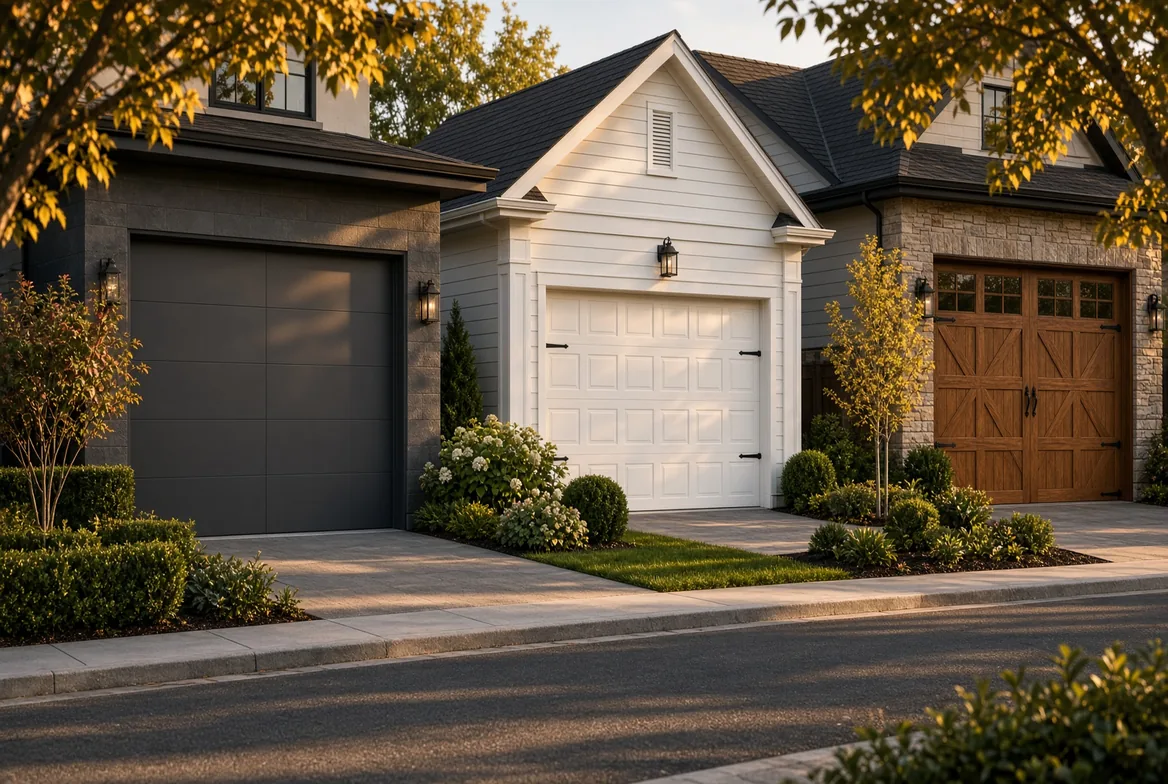
The short version
- Door brands and opener brands are separate markets. Clopay, Amarr, CHI, Haas, Garaga and Raynor make door panels; LiftMaster, Chamberlain, Genie and Craftsman make openers. Mixing and matching is normal.
- LiftMaster and Chamberlain are sister brands owned by the same company (The Chamberlain Group) — same motors and myQ app, but LiftMaster's solid rail is dealer-only and better for heavy doors, while Chamberlain's split rail is the DIY retail option.
- A 16x7 double door runs $900-$1,700 installed for basic steel, $1,600-$3,200 for mid-range insulated, and $3,200-$7,500+ for premium or dealer-exclusive brands like Haas or Garaga.
"What's the best garage door brand?" is really two separate questions, because the door panel and the motor that opens it are made — and sold — by entirely different companies. A house can have a Clopay door on a LiftMaster opener, or a Haas door on a Genie opener, and that's completely normal. Here's how the major residential garage door brands compare on materials, 2025-2026 pricing, warranty coverage, and where you can actually buy each one.
Door brands vs. opener brands
The garage door panel and the automatic opener are sold by different companies, so "best garage door brand" splits into two questions. Panel manufacturers like Clopay, Amarr, C.H.I., Haas, Garaga, and Raynor make the physical door — steel, wood, or composite sections, insulation, hinges, and springs. Opener manufacturers like LiftMaster, Chamberlain, Genie, and Craftsman make the motor unit that lifts it. You choose each independently, and most professional installers can pair any door brand with any opener brand as long as the opener's lift capacity matches the door's weight.
Garage door panel brands compared
Door brands split into two channels: big-box retail and professional-dealer-only. Retail brands are cheaper and easier to buy but often use lighter-gauge steel; dealer-exclusive brands cost more but guarantee professional installation and heavier construction.
Clopay — widest range, both channels
Clopay is the largest residential garage door manufacturer in North America, selling budget-to-mid-tier lines through The Home Depot and premium composite lines through its dealer network. Its signature technology is Intellicore®, a foamed-in-place polyurethane core reaching R-18.4. A 16x7 door installed runs $1,200 to $6,500+ depending on tier, with a Limited Lifetime warranty on multi-layer Intellicore panels.
Amarr — pinch-safety focus, Costco/Lowe's
Owned by ASSA ABLOY, Amarr is known for its SafeGuard Pinch Protection hinge system that reduces finger-entrapment risk, and its three-section Classica® carriage-house design. Sold through Costco (Lincoln series), Lowe's (ReliaBilt), and pro dealers, with a 16x7 installed range of $1,200 to $4,800 and a Limited Lifetime panel warranty.
Wayne Dalton — enclosed springs, fiberglass
A subsidiary of Overhead Door Corporation, Wayne Dalton's TorqueMaster® Plus system encloses the counterbalance springs inside a steel tube with an anti-drop safety catch — a safer look at the header, though techs note the proprietary parts can be harder to service. Fiberglass options (Model 9800) hold up well in coastal salt air. 16x7 installed: $1,150 to $4,500+.
C.H.I. Overhead Doors — dealer-only, top installer ratings
Owned by steelmaker Nucor, C.H.I. sells exclusively through certified pro dealers — no big-box path. Its Accent Woodtones digital imaging puts a photorealistic woodgrain finish on heavy-gauge steel. Installers consistently rate C.H.I. among the best for panel alignment and hardware quality. 16x7 installed: $1,500 to $5,500, Limited Lifetime warranty.
Haas Door — cold-climate thermal performance
Dealer-exclusive Haas uses pressure-injected polyurethane with true continuous thermal breaks that isolate the exterior steel skin from the interior one, and over 80% recycled steel content. Strong reputation for resisting sagging and wind-load deformation over decades. 16x7 installed: $1,500 to $4,800.
Garaga — the cold-weather gold standard
Canadian manufacturer Garaga engineers specifically for freeze-thaw climates — interlocking panel joints, triple-contact weather seals, and thermal efficiency up to R-16. Dealer-only, concentrated in Canada and the Northern US. 16x7 installed: $1,600 to $5,200.
Raynor — NeuFoam insulation, "For Life" warranty
75+ years in business, dealer-exclusive. Raynor's NeuFoam™ process fills the entire section cavity for uniform insulation density, and its Aspen™ AP200 is frequently cited by field techs as one of the sturdiest residential steel doors available. 16x7 installed: $1,400 to $4,500, with a "For Life" limited lifetime panel warranty.
Regional brands: General Doors, Ideal Door, Northwest Door
- General DoorsMid-Atlantic/Northeast regional, pro-dealer only, heavy galvanized steel. 16x7 installed: $1,200-$3,800.
- Ideal Door (Richins)Clopay's retail-only sub-brand sold exclusively at Menards — same platforms as Clopay at a lower price. 16x7 installed: $700-$2,800, the cheapest way to get a 3-layer Intellicore-equivalent door.
- Northwest DoorWestern US/Canada regional, pro dealers only, known for modern full-view aluminum and glass doors. 16x7 installed: $1,400-$4,500.
Not sure which brand fits your home?
A local installer can match a door and opener brand to your climate, budget, and door size in one visit.
Request ServiceDoor brand comparison table
| Brand | Price tier | 16x7 installed | Channel | Best for |
|---|---|---|---|---|
| Clopay | Mid–Ultra-premium | $1,200–$6,500+ | Big box + dealers | Widest style range, brand recognition |
| Amarr | Budget–High-end | $1,200–$4,800 | Costco/Lowe's + dealers | Pinch safety, carriage looks |
| Wayne Dalton | Budget–High-end | $1,150–$4,500+ | Select retail + dealers | Enclosed springs, coastal fiberglass |
| C.H.I. Overhead Doors | Mid–High-end | $1,500–$5,500 | Dealers only | Heavy steel, photorealistic wood finish |
| Haas Door | Mid–High-end | $1,500–$4,800 | Dealers only | Cold-climate thermal breaks |
| Garaga | Mid–High-end | $1,600–$5,200 | Dealers only (Canada/N. US) | Extreme cold, air-tight seals |
| Raynor | Mid–Premium | $1,400–$4,500 | Dealers only | Panel longevity, coated hardware |
| General Doors | Value–Mid | $1,200–$3,800 | Regional dealers (East Coast) | Durable steel, Mid-Atlantic/Northeast |
| Ideal Door (Richins) | Budget–Mid | $700–$2,800 | Menards exclusive | DIYers, rental upgrades, tight budgets |
| Northwest Door | Mid–High-end | $1,400–$4,500 | Dealers + distributors (Western US) | Modern glass/aluminum, coastal moisture |
LiftMaster vs. Chamberlain vs. Genie
LiftMaster and Chamberlain aren't competitors — they're the same company. Both are owned by The Chamberlain Group LLC and share the same drive motors, logic boards, and myQ® smart platform. The real difference is the rail and the sales channel.
- LiftMasterSold only through professional dealers. Uses a continuous one-piece solid steel rail (T-rail or I-beam) that doesn't flex under heavy loads — the recommended choice for double-wide (16x7+), heavy insulated, or solid-wood doors. Commercial-grade DC motors, integrated battery backup, extended dealer warranties.
- ChamberlainSold direct-to-consumer at Home Depot, Lowe's, and online. Uses a multi-piece sectional rail that bolts together so the whole unit fits in a retail box for DIY transport and installation. Flexes more than LiftMaster's solid rail under heavy loads, but leads on consumer smart features — built-in HD camera and two-way audio on models like the B6753T.
- GenieMade by a different company entirely — Overhead Door Corporation — with its own motors and its own smart platform, Aladdin Connect®, which works with Alexa and Google Assistant without a subscription. Genie is the main brand still offering screw-drive openers (fewer moving parts, good reliability in temperate climates). Sells both DIY retail models and dealer-installed solid-rail models.
- CraftsmanLicensed and manufactured by The Chamberlain Group, sold at Lowe's and Ace Hardware. Shares motors, gears, and logic boards with Chamberlain at a lower price point — a budget-DIY pick with myQ support.
Opener brand comparison table
| LiftMaster | Chamberlain | Genie | Craftsman | |
|---|---|---|---|---|
| Parent company | Chamberlain Group | Chamberlain Group | Overhead Door Corp. | Chamberlain Group (licensed) |
| Sold through | Pro dealers only | DIY retail (Home Depot, Lowe's) | Retail + pro dealers | DIY retail (Lowe's, Ace) |
| Rail | 1-piece solid steel | Multi-piece sectional | Multi-piece (retail) / solid (dealer) | Multi-piece sectional |
| Smart platform | myQ® | myQ® | Aladdin Connect® | myQ® |
| Best for | Heavy/double doors, wall-mount | DIY camera tech | Voice control, screw drives | Budget DIY |
UL 325 safety standards — every brand must comply
Every residential opener sold in the US and Canada meets the same minimum safety bar, regardless of brand. UL 325 requires two independent layers of entrapment protection: an inherent reversal system that stops and reverses the door within 2 seconds of hitting an obstruction, plus photoelectric safety sensors mounted 5-6 inches above the floor on both sides of the door.
As of 2025-2026, following California's SB 969 mandate (passed after wildfire-related power outages trapped homeowners in their garages), LiftMaster, Chamberlain, Genie, and Craftsman all now bundle battery backup into their core opener lines nationwide, supporting at least 30 open/close cycles during a power outage — not just in California.
How to pick the right brand for your home
1. Separate the door brand from the opener brand
- What to doPick the panel (Clopay, Amarr, CHI, Haas, Garaga, Raynor...) and the motor (LiftMaster, Chamberlain, Genie...) independently — they're different companies and any combination is normal.
2. Match insulation to your climate
- What to doCold climates: foamed-in-place polyurethane with true thermal breaks (Garaga, Haas, Clopay Intellicore, Raynor NeuFoam). Mild climates: EPS-insulated or non-insulated steel saves money without much downside.
3. Check the sales channel
- What to doBig-box brands (Clopay/Amarr retail lines, Ideal Door at Menards) are cheaper and DIY-friendly. Dealer-exclusive brands (CHI, Haas, Garaga, Raynor, Northwest Door) cost more but guarantee professional installation and heavier-gauge construction.
4. Size the opener to the door
- What to doHeavy insulated, solid-wood, or double-wide (16x7+) doors do best on a one-piece solid-rail opener (LiftMaster, or Genie's dealer-installed models). Standard single steel doors run fine on a DIY multi-piece-rail opener (Chamberlain, Genie retail, Craftsman).
Frequently asked questions
What is the best garage door brand overall?
There's no single best brand — it depends on budget and climate. Clopay is the largest US manufacturer with the widest style range and both retail and dealer lines. C.H.I. Overhead Doors and Haas Door are rated highest by professional installers for build quality but are dealer-only. Garaga is the top choice for extreme cold climates. For a tight budget, Ideal Door (Clopay's Menards-exclusive brand) is the cheapest way to get a 3-layer insulated door.
Is LiftMaster better than Chamberlain?
LiftMaster and Chamberlain are made by the same company (The Chamberlain Group) and share the same motors, logic boards, and myQ app. The real difference is the rail: LiftMaster uses a one-piece solid steel rail sold only through professional dealers, which is sturdier for heavy or double-wide doors. Chamberlain uses a multi-piece rail sold at Home Depot and Lowe's for DIY installation. For a standard single door, Chamberlain is a fine DIY choice; for a heavy 16x7 door, LiftMaster's solid rail is the safer bet.
What's the difference between Genie and Chamberlain/LiftMaster openers?
Genie is made by a different company (Overhead Door Corporation) and doesn't share parts with LiftMaster or Chamberlain. Genie uses its own Aladdin Connect smart platform instead of myQ, and it's the main brand still offering screw-drive openers, which have fewer moving parts than belt or chain drives. Genie sells both DIY retail models and dealer-installed models with solid rails.
Which garage door brands are dealer-only vs. sold at big-box stores?
Dealer-only brands include C.H.I. Overhead Doors, Haas Door, Garaga, Raynor, General Doors, and Northwest Door — you can only get these through a professional installer. Retail/big-box brands include Ideal Door (Menards exclusive), Wayne Dalton (select retail), and entry-level Clopay and Amarr lines (Home Depot, Costco, Lowe's). Clopay and Amarr also sell premium lines through dealers only, so the same brand name can appear in both channels at different quality tiers.
How much does a good quality garage door cost installed?
A basic non-insulated 16x7 steel door runs $900-$1,700 installed. A mid-range insulated steel door with EPS foam runs about $1,600-$3,200. A premium door — foamed-in-place polyurethane, composite overlay, real wood, or a dealer-exclusive brand like Haas or Garaga — runs $3,200 to $7,500 or more. Add $300-$700 if you're also installing a new smart opener.
What insulation type should I look for in a garage door?
Foamed-in-place polyurethane (used by Clopay's Intellicore, Haas, Garaga, Raynor's NeuFoam) is injected between the steel skins and bonds directly to them, creating a rigid sandwich panel with R-values up to 18.4 and better dent resistance. Expanded polystyrene (EPS) foam board is cheaper but delivers a lower R-value (roughly 6-10) and less structural rigidity. Cold climates should prioritize polyurethane with true thermal breaks; mild climates can save money with EPS or non-insulated doors.
Do all garage door openers meet the same safety standards?
Yes — every residential opener sold in the US and Canada must meet UL 325, which requires two independent entrapment-protection systems: an inherent reversal that stops and reverses the door within 2 seconds of hitting an obstruction, and photoelectric safety sensors mounted 5-6 inches above the floor. As of 2025-2026, major brands (LiftMaster, Chamberlain, Genie, Craftsman) also bundle battery backup as standard, following California's SB 969 mandate after wildfire-related power outages trapped people in their garages.
A note on accuracy
Prices, warranty terms, and specifications are manufacturer-published ranges as of 2025-2026 and vary by region, dealer, and exact model — get a written quote from a local installer before budgeting a project.