The short version
- Most cracks in garage floor concrete are cosmetic shrinkage cracks — thin, random, and no wider than 1/8 inch. They form as the slab cures and don't need structural repair.
- Worry when a crack is wider than 1/4 inch, has a height difference across it, is spreading, or leaks water — those point to settlement or a deeper structural issue.
- Costs range widely by fix: $150-$500 to seal a single crack, $750-$2,500 to level a sinking slab, $1,200-$3,000+ to resurface the whole floor, or $6,000-$15,000+ for full replacement in severe cases.
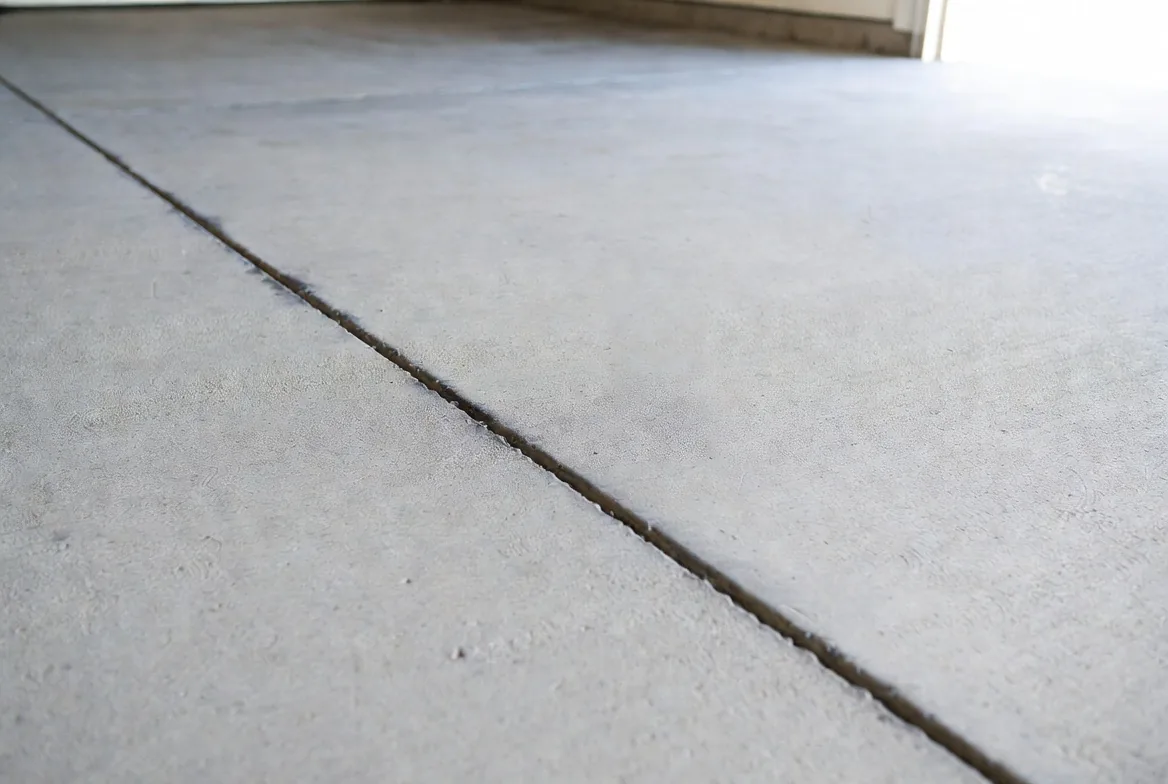
Cracks in garage floor concrete show up in almost every garage sooner or later, and most of them are nothing to worry about. The concrete itself tells you which kind you're dealing with — a thin, random hairline crack from normal curing shrinkage is a very different problem from a wide crack with one side sitting higher than the other. Here's how to tell them apart, what actually causes each type, and what repair, leveling, or resurfacing costs in 2025-2026.
Types of garage floor cracks
- Shrinkage cracksForm as the concrete cures and loses moisture over roughly its first 28 days. Thin, random, map-like pattern. The most common type, and almost always cosmetic.
- Settlement cracksCaused by soil that wasn't compacted properly before the slab was poured, creating voids that let the concrete sink or crack under its own weight. Usually wider than shrinkage cracks, often with a visible height difference between the two sides.
- Frost heave cracksWater enters small cracks and pores, freezes and expands, then thaws and lets in more water — repeated freeze-thaw cycles progressively widen the damage over multiple winters.
- Chemical attackDe-icing salts, oil, and other chemicals degrade the concrete surface over time, contributing to cracking and deterioration.
What causes cracks in garage floor slabs
- Poor soil compactionBackfill soil around a foundation commonly settles 2-6 inches over the first 3-5 years, undermining the slab above it.
- Inadequate control jointsJoints should be cut within 6-12 hours of finishing, spaced no more than 8-12 feet apart. Many garage slabs only have joints at the perimeter, leaving 20+ feet of unjointed slab prone to random cracking.
- Construction shortcutsLow-quality concrete mix, insufficient reinforcement, too little gravel base, improper troweling, or inadequate curing time during the original pour.
- Freeze-thaw cyclingProgressively widens existing small cracks and pores over repeated winters, especially without a sealed or coated surface.
When to worry: structural vs. cosmetic
| Sign | Likely cosmetic | Worth a professional look |
|---|---|---|
| Width | Under 1/8 inch | Wider than 1/4 inch |
| Height difference across crack | None | One side higher than the other |
| Direction | Random, map-like pattern | Diagonal and wider than 1/4 inch |
| Reach | Isolated, contained crack | Runs the full width of the slab |
| Behavior over time | Stable, unchanged | Growing or spreading |
| Water | Dry | Active seepage |
Not sure which kind of crack you have?
A technician can evaluate it on-site and tell you whether it's cosmetic or needs a real fix.
Request ServiceHow to check a crack yourself
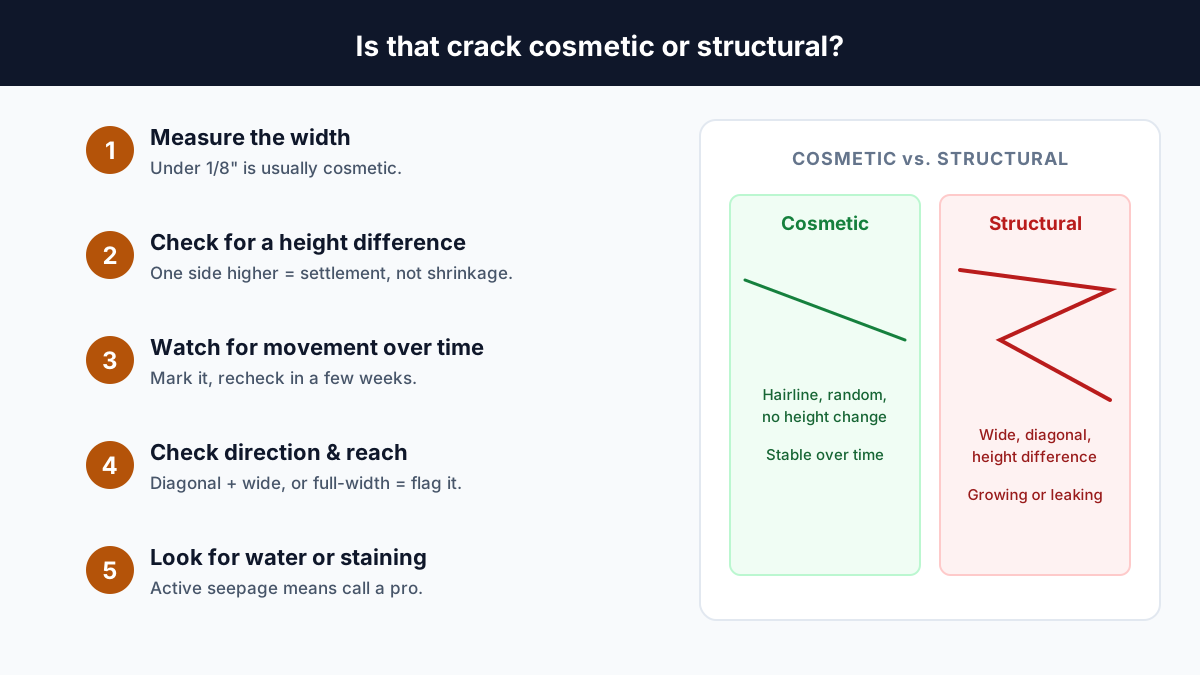
1. Measure the crack width
- What to look forCracks under 1/8 inch are generally cosmetic. Cracks wider than 1/4 inch warrant a professional look.
2. Check for a height difference
- What to look forRun a hand or straightedge across the crack. If one side sits higher than the other, that's differential settlement, not simple shrinkage.
3. Watch for movement over time
- What to look forMark the ends of the crack and note its width, then recheck in a few weeks. Rapid growth or spreading is a warning sign.
4. Check the crack's direction and reach
- What to look forA diagonal crack wider than 1/4 inch, or one running the full width of the slab, is more likely structural than an isolated random crack.
5. Look for water or staining
- What to look forActive water seepage through a crack is a sign it goes deeper than the surface and should be evaluated by a professional.
2025-2026 garage floor crack repair costs
| Fix | Typical cost |
|---|---|
| Minor crack patching/filling | $200-$1,000 |
| Per-crack professional repair | $150-$500 |
| Polyurethane/silicone crack sealing | $150-$300 per crack |
| Structural crack repair (steel-bar stitching) | $50-$100/hr plus materials |
| Concrete leveling (garage floor) | $750-$2,500 |
| — Traditional mudjacking | $4-$9/sq ft |
| — Polyurethane foam jacking | $5-$25/sq ft |
| Resurfacing (2-car garage) | $1,200-$3,000+ ($3-$8/sq ft) |
| Larger structural repair | $2,500-$7,000+ |
| Full replacement | $6,000-$15,000+ |
For a sinking slab specifically, polyurethane foam jacking is generally the preferred method for garages: it costs more per square foot than traditional mudjacking, but the lightweight foam doesn't add extra load to soil that's already struggling to support the concrete, reducing the odds of the same section sinking again.
Resurfacing vs. replacement
Resurfacing cleans the existing floor, repairs cracks and holes, and applies a new cementitious layer over the whole surface — a good option when damage is widespread rather than limited to one or two cracks, and it's often paired with an epoxy or polyaspartic coating afterward for extra protection and a finished look. Full replacement is reserved for the more severe cases: significant structural damage, delamination, or a subgrade so poor it needs to be removed and re-poured. Most garages with isolated cracks or moderate sinking never need to go that far.
Frequently asked questions
Are cracks in a garage floor normal?
Yes, in most cases. Shrinkage cracks form as concrete cures and loses moisture over its first 28 days, creating thin, random cracks that are almost always cosmetic. They're the most common type of garage floor crack and generally don't need structural repair.
When should I worry about a garage floor crack?
Worry when a crack is wider than 1/4 inch, when one side sits higher than the other (differential settlement), when the crack is growing or spreading quickly, or when water is actively seeping through it. Diagonal cracks wider than 1/4 inch can signal shear stress and are worth a professional evaluation.
What causes cracks in a garage floor?
The main causes are poor soil compaction under the slab (backfill soil can settle 2-6 inches over the first 3-5 years), inadequate control joints during the original pour, construction shortcuts like low-quality concrete or insufficient curing, and freeze-thaw cycling that gradually widens existing small cracks.
How much does it cost to repair a garage floor crack?
Minor crack patching or filling runs $200-$1,000. Per-crack repair typically costs $150-$500, with professional polyurethane or silicone crack sealing running $150-$300 per crack. Structural crack repair involving steel-bar stitching runs $50-$100 per hour plus materials.
What if my garage floor is sinking, not just cracking?
That calls for concrete leveling rather than crack repair alone. Garage floor leveling typically costs $750-$2,500. Polyurethane foam jacking ($5-$25/sq ft) is generally preferred over traditional mudjacking ($4-$9/sq ft) for garage floors, since the lightweight foam doesn't add extra load to soil that's already struggling to support the slab.
What's the difference between crack repair and resurfacing?
Crack repair fixes individual cracks. Resurfacing cleans the whole floor, repairs cracks and holes, then applies a new cementitious layer over the entire surface, making it look new. Resurfacing runs $1,200-$3,000+ for a standard 2-car garage ($3-$8/sq ft) and makes more sense for a floor with widespread surface damage rather than one or two isolated cracks.
When does a garage floor need full replacement instead of repair?
Full replacement, running $6,000-$15,000+, is typically reserved for severe structural damage, significant delamination, or a poor subgrade that requires removing and re-pouring the slab. Most garage floors with isolated cracks or moderate sinking can be addressed with repair, leveling, or resurfacing well short of full replacement.
A note on accuracy
This is general homeowner guidance, not a substitute for an on-site inspection. Cost figures are national-average ranges for 2025-2026 and vary by region, slab condition, and repair method. If you're unsure whether a crack is structural, have it evaluated before deciding on a fix.