The short version
- Polyaspartic garage floor coating costs more upfront — about $5-$12/sq ft vs. $3-$12/sq ft for epoxy — but lasts 15-20 years versus 3-5 years for typical epoxy, often making it cheaper per year of service.
- Polyaspartic cures in hours, not days: foot traffic in ~2 hours, vehicle traffic in ~24 hours, versus 12+ hours and 72 hours for epoxy.
- Surface prep decides whether either coating lasts. Grinding, cleaning, and moisture testing the concrete matters more than which coating you pick — and it's also why DIY epoxy fails at a high rate.
Choosing between epoxy and polyaspartic garage floor coating comes down to one real trade-off: pay more now for a floor that lasts three to four times longer, or pay less now and expect to redo it sooner. Both are common concrete coatings for garages, but they behave very differently on cost, cure time, and how forgiving they are of imperfect prep work. Here's the 2025-2026 pricing, real lifespan numbers, and the prep steps that determine whether either one actually holds up.
What is polyaspartic garage floor coating?
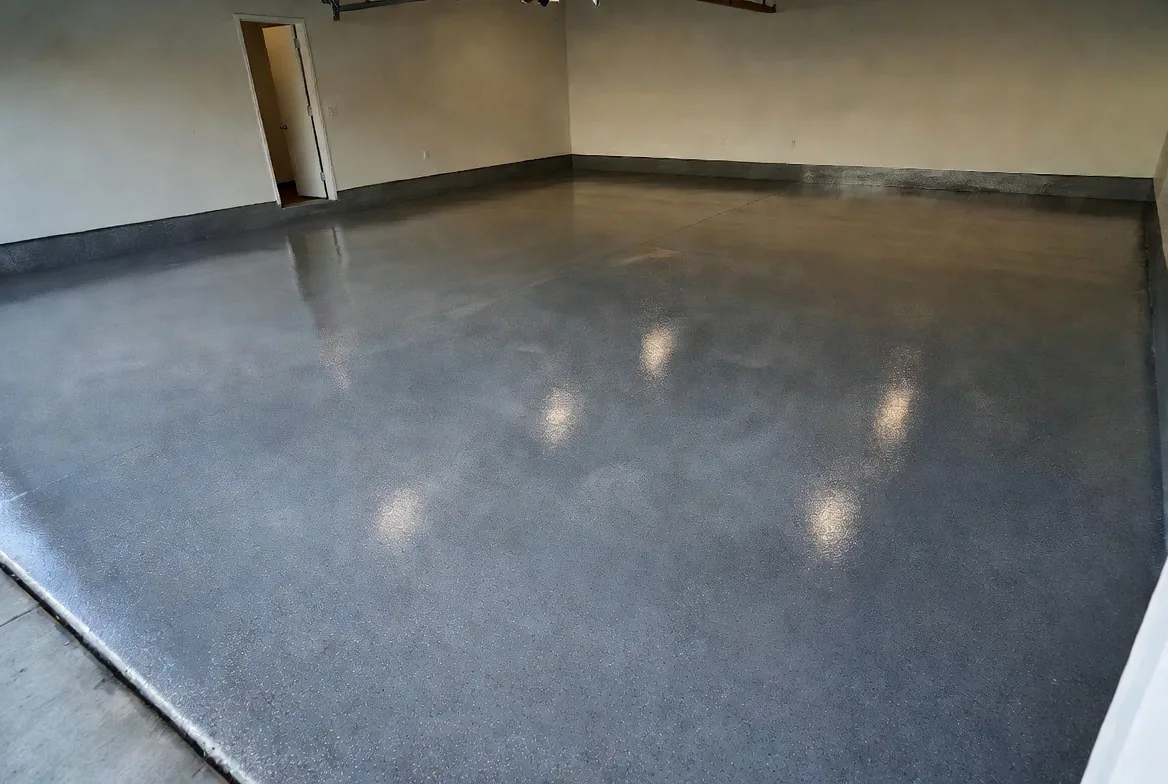
Polyaspartic garage floor coating is a fast-curing polymer coating — a close cousin of polyurea — applied over prepped concrete to create a hard, glossy, chemical- and UV-resistant surface. It bonds more aggressively to concrete than traditional epoxy and resists yellowing under sunlight, which is a common complaint with epoxy floors in garages that get direct light through an open door.
2025-2026 cost comparison
| Coating | Per sq ft (professional) | Typical 2-car garage total |
|---|---|---|
| Polyaspartic (professional) | $5-$12 (common range $7-$9) | $2,800-$3,600 (up to $5,800 with add-ons) |
| Epoxy (professional) | $3-$12 (common range $5-$7) | $1,500-$5,000 (often $2,000-$2,800) |
| Epoxy (DIY kit) | $2-$5 | $720-$1,800 in materials |
Run the numbers over time and the gap narrows. A $3,000 polyaspartic floor lasting 20 years costs roughly $150 per year. A $2,000 epoxy floor recoated every 7 years costs roughly $285 per year. The higher sticker price on polyaspartic often works out cheaper per year of use, once you account for how much longer it lasts.
Not sure which coating fits your garage?
A pro can assess your concrete's condition and give you an installed price for either option.
Request ServiceLifespan & durability
- PolyasparticLasts 15-20 years. Resists UV yellowing and chemical spills better than epoxy, and bonds more aggressively to the concrete substrate.
- Epoxy, professionally installedCommonly lasts 10-20 years with proper prep and topcoat, though many homeowners see visible wear or yellowing closer to the 3-5 year mark, especially with sun exposure.
- Epoxy, DIY kitTypically lasts only 2-5 years — peeling, bubbling, hot-tire pickup, and uneven wear are common, almost always traced back to surface prep that skipped proper grinding.
Overall, polyaspartic lasts roughly 3-4 times longer than a typical epoxy floor.
Cure time & installation
| Stage | Polyaspartic | Epoxy |
|---|---|---|
| Individual coat set time | 20-60 minutes | Several hours |
| Ready for foot traffic | ~2 hours | 12+ hours |
| Ready for vehicle traffic | ~24 hours | 72 hours |
Polyaspartic can also be installed across a wider temperature range and in more weather conditions than epoxy, which is part of why professional crews can often finish a polyaspartic floor in a single day.
DIY vs. professional installation
- DIY epoxyThe realistic DIY option, since epoxy's slower cure gives enough working time. Kits run $100-$300 (about $720-$1,800 for a full two-car garage), but last only 2-5 years and fail at a high rate when prep is rushed.
- DIY polyasparticNot practical. The same rapid cure that lets pros finish in one day makes it nearly impossible for a homeowner to spread evenly and broadcast decorative flakes before it sets.
- Professional installationIncludes proper diamond grinding, which most homeowners don't have equipment for, and typically lasts 3-4x longer than a DIY job for either coating type.
Surface prep: the step that decides whether either coating lasts
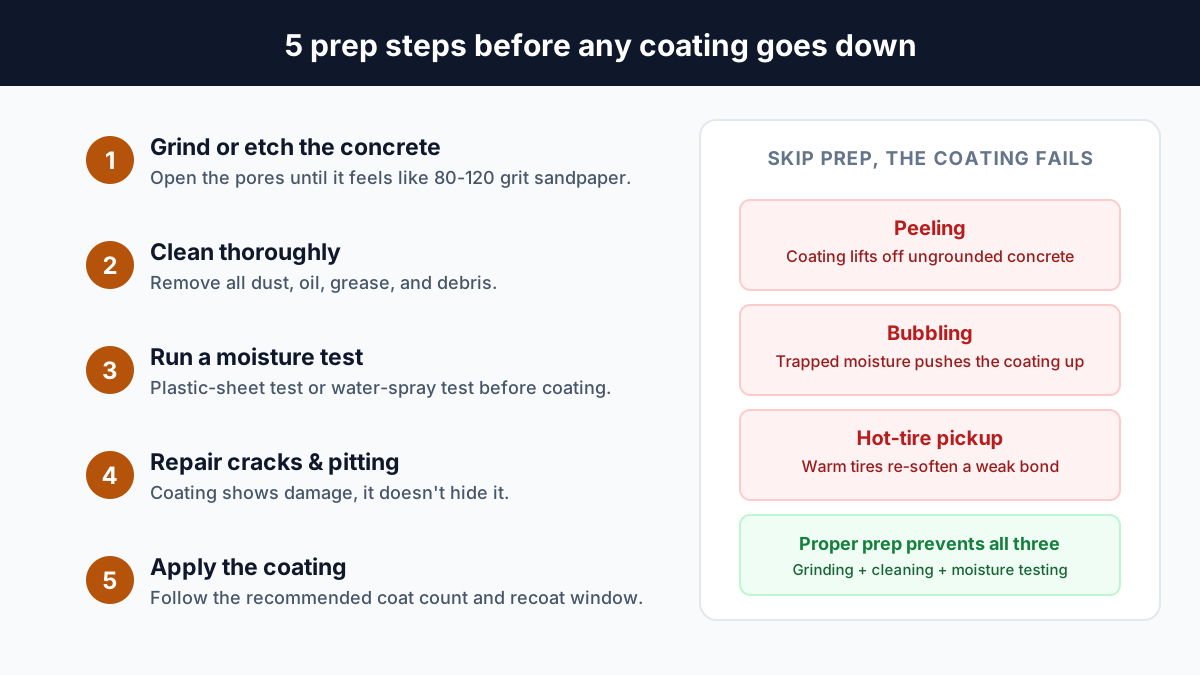
1. Grind or etch the concrete
- GoalOpen the concrete's pores so the coating can bond. A mechanical diamond grinder is the professional-grade method; acid etching is a cheaper but messier DIY alternative. The finished surface should feel like 80-120 grit sandpaper.
2. Clean the surface thoroughly
- GoalRemove all dust, oil, grease, and other bond-inhibiting residue. The concrete must be clean, sound, and dry before coating.
3. Run a moisture test
- GoalTape 24-inch plastic sheets to the floor for at least 24 hours and check the underside for condensation, or spray water on the prepped concrete — beading or puddling means more prep is needed, and trapped moisture may require a vapor barrier.
4. Repair cracks and pitting
- GoalFill and level damage before coating — a finished coating shows underlying concrete flaws instead of hiding them.
5. Apply the coating in the recommended coats
- GoalFollow the product's coat count and recoat timing. This matters especially for polyaspartic, where the working window between coats is short.
The real failure point
Improper surface preparation is the leading cause of coating failure for both epoxy and polyaspartic. The coating material matters less than whether the concrete was properly ground, cleaned, and tested for moisture first.
Which one should you choose?
- Choose polyaspartic ifYou're staying in the home long-term, want a one-day professional install, or your garage sees heavy vehicle and chemical exposure.
- Choose epoxy ifBudget is the priority, you're selling within 2-3 years, or you plan to do the work yourself.
Frequently asked questions
How much does polyaspartic garage floor coating cost?
Professionally installed polyaspartic runs about $5-$12 per square foot, with $7-$9 being a common middle range. For a standard 400 sq ft two-car garage, that's roughly $2,800-$3,600, though full installs can range $2,000-$5,800 depending on concrete condition and decorative add-ons.
Is polyaspartic worth the extra cost over epoxy?
Often, yes, over time. Polyaspartic costs more upfront but lasts 15-20 years versus 3-5 years for typical epoxy. A $3,000 polyaspartic floor lasting 20 years works out to about $150/year, versus roughly $285/year for a $2,000 epoxy floor recoated every 7 years.
How long does polyaspartic take to cure?
Polyaspartic is ready for foot traffic in about 2 hours and vehicle traffic in about 24 hours, with individual coats setting in as little as 20-60 minutes. Epoxy needs roughly 12+ hours before foot traffic and 72 hours before vehicle traffic.
Can I install polyaspartic myself?
It isn't recommended. The same fast cure that lets professionals finish a floor in one day makes polyaspartic nearly impossible to apply correctly as a DIY project — there isn't enough working time to spread it and broadcast flakes evenly before it sets.
Is DIY epoxy worth it?
DIY epoxy kits cost $100-$300 (about $720-$1,800 for a full two-car garage) versus $1,500-$5,000 professionally installed, but DIY kits typically last only 2-5 years versus 10-20 years for a professional job. Improper surface prep, which most homeowners can't fully replicate without diamond-grinding equipment, is the leading cause of DIY epoxy failure.
When does epoxy make more sense than polyaspartic?
Epoxy fits tighter budgets and homeowners selling within 2-3 years — a fresh $2,000-$2,800 epoxy floor shows well for a sale without paying the polyaspartic premium for years of life you won't use. It's also the more realistic DIY option since epoxy's slower cure gives homeowners enough working time.
Why do garage floor coatings fail?
Improper surface preparation is the leading cause of coating failure for both epoxy and polyaspartic. Skipping grinding or etching, not cleaning the concrete fully, or coating over trapped moisture leads to peeling, bubbling, and hot-tire pickup regardless of which coating material is used.
A note on accuracy
This is general homeowner guidance, not a substitute for an on-site quote. Cost, lifespan, and cure-time figures are national-average ranges for 2025-2026 and vary by region, concrete condition, and product brand.